
Demand
How we model ERCOT demand.
ERCOT Demand
Nodal Demand
Description
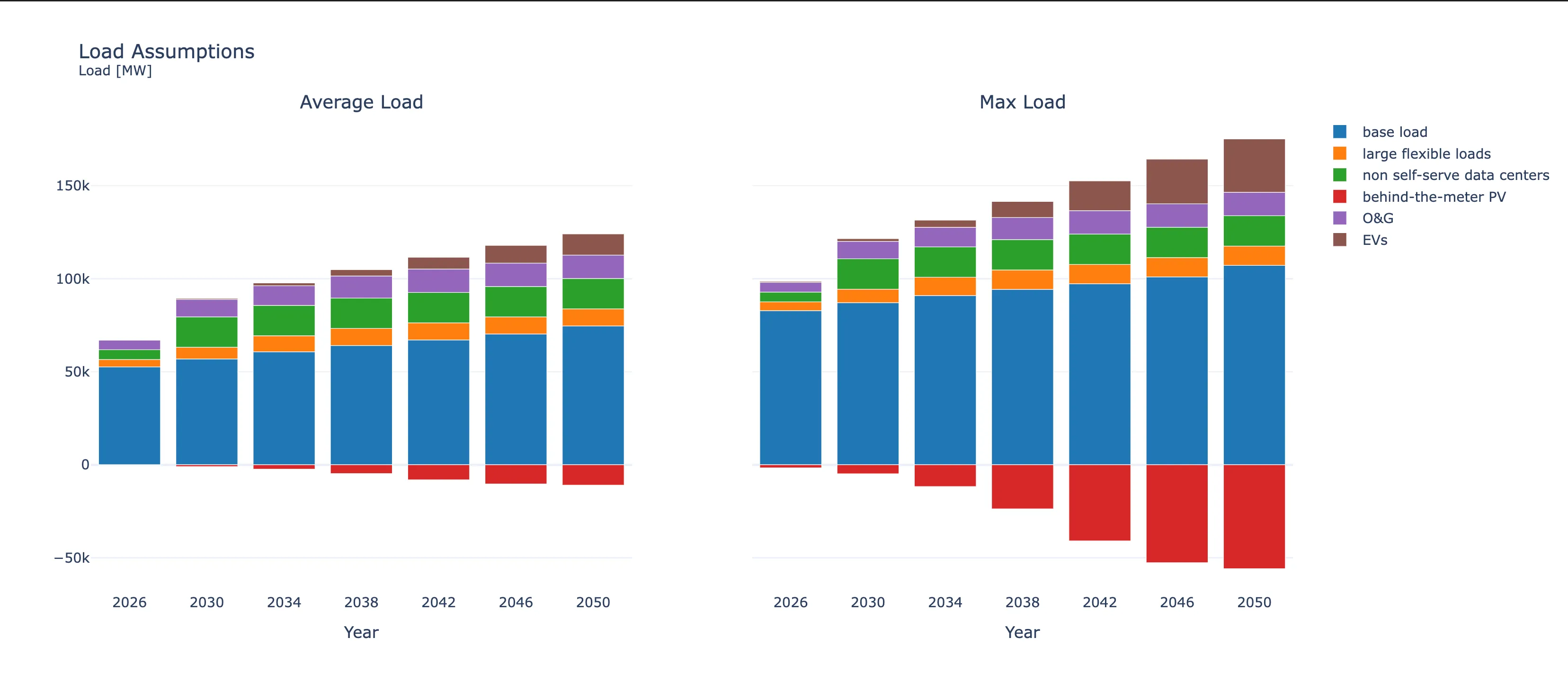
We model demand at the substation (node) level with hourly resolution to capture both intraday shape and seasonal effects. The primary input is ERCOT’s Long-Term Load Forecast (LTLF), which provides weather-zone hourly profiles through 2045 and separates demand into:
- Base (economic) load
- Behind-the-meter (BTM) rooftop PV
- Electric vehicles (EVs)
- Large flexible loads (LFLs)
- Large loads from Contracts & Officer Letters (hydrogen, data centers, crypto, oil & gas, industrial)
We use LTLF for Base, BTM PV, EV, and LFL. We do not take ERCOT’s Contracts & Officer Letters into our demand assumptions; instead, we apply Modo’s in-house bottom-up large-load build, informed by our research team. Oil & gas electrification assumptions are anchored to ERCOT’s Permian Basin Reliability Planning Study.
Central Case
Load profiles
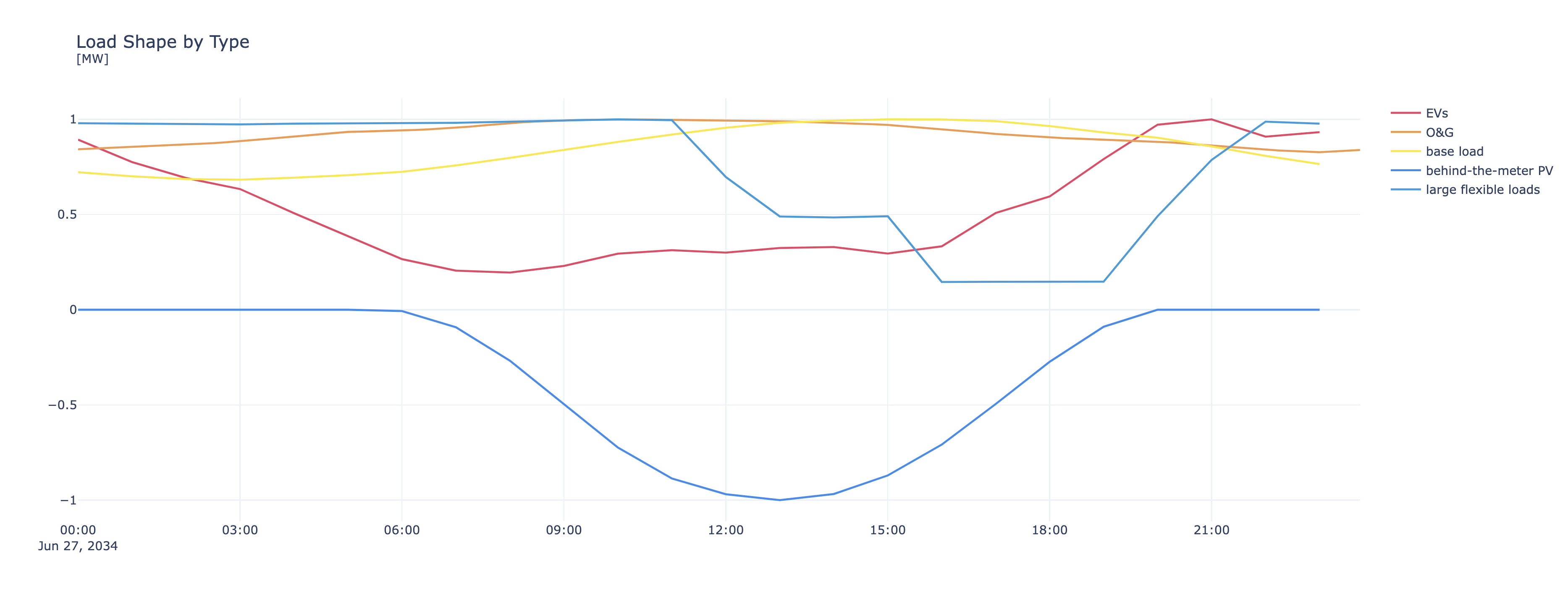
Each load component exhibits a different profile based on function, price responsiveness and any on-site behind-the-meter generation.
Representative large load profiles
Load Sensitivity
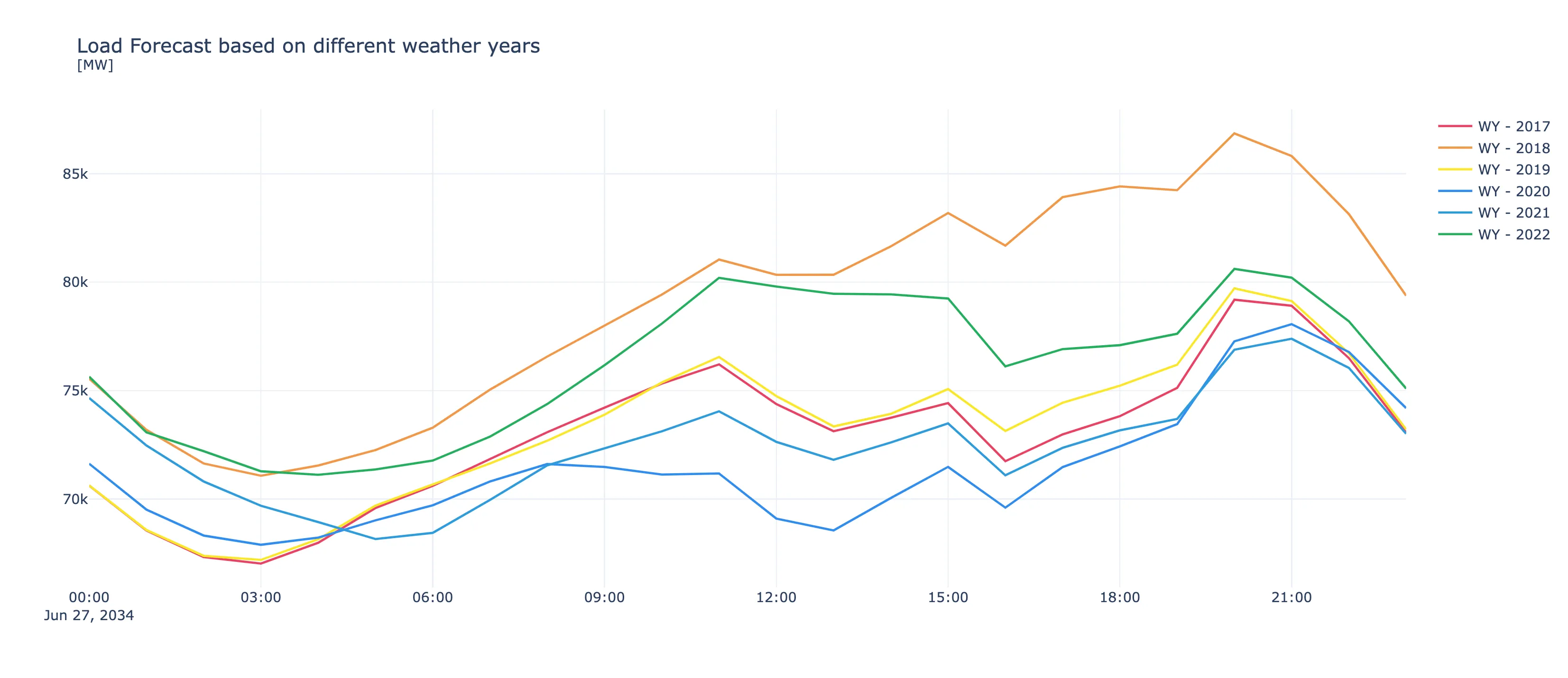
ERCOT’s LTLF timeseries data represents a “median” (p50) weather year using 2008 data. We extend this by enabling alternative weather-year load shapes to be layered on top of ERCOT’s values—supporting higher/lower demand cases and aligning the demand shapes with our renewable load-factor weather years for consistent scenario analysis.
Assumptions and Caveats
- Beyond 2034, demand growth is applied at the weather zone level, without explicit nodal detail.
Data Sources
| Source | Description | Link |
|---|---|---|
| **ERCOT Long-Term Load Forecast | Provides weather zone hourly projections until 2045 | ERCOT LTLF |
| ERCOT Regional Transmission Plan (RTP) | Provides zonal to nodal distribution factors | ERCOT RTP |
| ERCOT Permian Basin Reliability Planning Study | Supports modeling of additional oil & gas-related load growth in West Texas | Permian Basin Study |
| Organization press releases | Used to identify additional large, non-O&G loads coming online. |
Updated 12 months ago